A Handful of Rice for Mother
The Childhood Memory That Became a Movement of Compassion
Among all the influences in T. N. Prathapan’s life, none shaped him more deeply than his mother. To him, she was not just a parent but God in visible form, the silent strength behind his values, compassion, and public life. Even today, he grows emotional when speaking about her, and that love gradually expanded into a lifelong commitment to honour struggling mothers everywhere.
Prathapan’s childhood was marked by poverty along Kerala’s coastal belt. His mother worked tirelessly washing utensils in nearby houses, cleaning courtyards, and walking nearly nine kilometres to labour in the paddy fields during harvest season. After the main harvest, she would collect leftover sheaves that others ignored. Sometimes they held only a few grains, but she carefully gathered, dried, and stored them for the months of scarcity.
Those months came every monsoon. When rough seas from June to August halted fishing, hunger spread across coastal homes. It was then that she opened her small reserve of rice, boiled a handful, pounded it, and made thin kanji for her children. That humble meal became one of Prathapan’s most powerful memories.
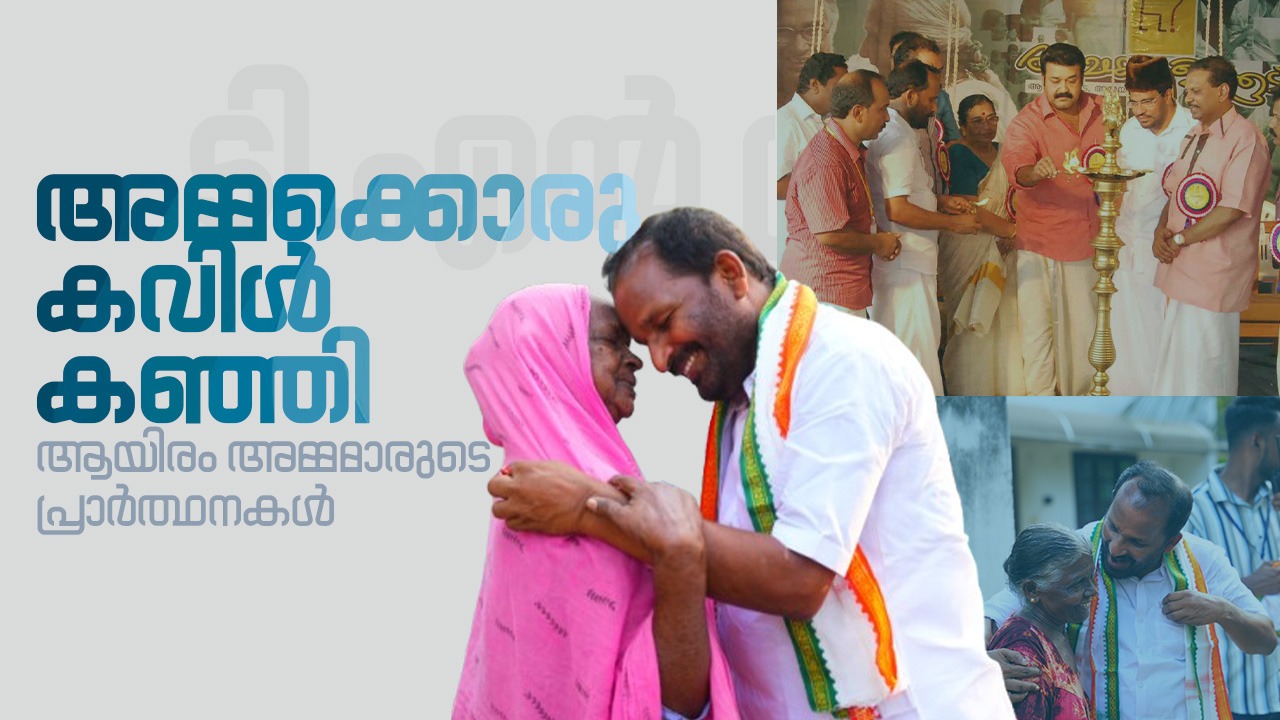
Years later, as MLA of Nattika, he transformed that childhood experience into a humanitarian initiative called “A Handful of Rice for Mother.” The programme provided a monthly pension of ₹500 to 1,000 elderly widowed mothers who had no children or support, a visionary effort at a time when welfare schemes were limited and far from universal.
The launch at Thalikulam Snehatheeram became an unforgettable emotional gathering. A thousand mothers were honoured, accompanied by a thousand young girls symbolizing their granddaughters. Actor Mohanlal attended with his own mother, and the keynote address by Dr. M. P. Abdussamad Samadani moved the entire audience to tears. Sitting among the honoured mothers was Prathapan’s own mother, Kaalikkutty.
Despite financial uncertainty, the project continued through public support. Friends and wellwishers stepped forward to “adopt” mothers by sponsoring their pensions and maintaining personal contact. Later, in Kodungallur, Prathapan expanded the initiative and established a care home for elderly mothers with the help of local volunteers.
For Prathapan, motherhood is not merely a personal memory. It is the foundation of his public compassion. His love for his mother became a movement that restored dignity and care to thousands who once lived unseen.